
Quick summary
- Most camping trips do not go wrong because of big disasters. They go wrong because of small jobs you suddenly cannot do: cutting cord, opening a can, splitting kindling, fixing a loose screw.
- The problem is rarely skill. It is that the right tool is sitting in a drawer at home.
- A folding multitool with a knife, saw, screwdriver bits, openers, fire starter and whistle covers the small jobs that come up at almost every campsite.
- Keep it in the same pocket of the same bag every time, so it goes on every trip without thinking.
- Use blades and fire safely, follow campground fire rules and check local knife laws before you travel.
You finally get the truck parked, the tent half up and the cooler open. Then someone asks for a knife to cut the tarp line. You pat your pockets. Nothing. The pocketknife is in the kitchen drawer, the screwdriver is in the garage and the lighter is in yesterday's jacket. For the next hour, every small job turns into a negotiation with your teeth, your car keys and whatever sharp rock you can find.
Almost every guy who camps has lived some version of that evening. This guide walks through the nine campsite headaches that show up when you leave your tools at home, why they hit so hard when you are far from a hardware store, and how one compact folding multitool solves most of them before they start.
The moment you realize the tool is still in the garage

In short: At home a missing tool costs you a walk to the garage. At camp it can cost you an hour, a meal or a good night's sleep.
At home, forgetting a tool is a small annoyance. You walk to the garage, borrow one from a neighbor or run to the store. At a campsite, none of that exists. The nearest store might be 40 minutes away on a dirt road, and nobody wants to drive back out after dark for a two-dollar part.
That is why small problems feel so big outdoors. The job itself takes two minutes. Not having the tool turns it into a project. And because you are tired, hungry and losing daylight, your patience runs out fast.
The fix is not to bring a full toolbox. Most of us do not have the room, and nobody wants to carry one from the parking spot to a walk-in site. The fix is to bring one tool that covers the jobs you actually run into, and to make sure it is packed every single time.
Headaches 1 and 2: rope you can't cut and packaging you can't open

In short: Cord, tarp lines, zip ties and plastic packaging are the most common cutting jobs at camp. A sharp folding blade and a rope-cutting notch handle all of them.
Count how many times you need to cut something on a normal camping weekend. Guy lines for the tent. Paracord for a clothesline. A tarp that needs to be tied lower before the rain. Zip ties holding a new lantern in its box. The shrink wrap on a pack of hot dogs.
- Without a blade, you end up sawing cord with a key, burning it with a lighter or chewing through plastic. It is slow, it makes a mess and it is how people cut their hands.
- With a folding knife, you get clean cuts in seconds, and clean cuts on cord are easier to tie and less likely to fray.
- A rope cutter lets you cut cord or line without opening the main blade, which is handy when you are working fast or in poor light.
Cut away from your body, keep your other hand behind the blade and close the knife as soon as you are done. It sounds basic, but most campsite cuts happen when a blade is left open on a table or in a pocket.
Headache 3: dinner stalls because nothing will open

In short: Canned food and bottled drinks are camping staples. A built-in can opener and bottle opener mean dinner never waits on a missing kitchen gadget.
Camp food is simple on purpose: canned beans, chili, soup, a few bottles of something cold. Simple, that is, until you realize nobody packed a can opener. Suddenly the whole group is standing around a pot trying to pry a lid open with a screwdriver and a rock.
A multitool with a can opener and a bottle opener ends that problem for good. Because it lives in your pocket instead of the kitchen bin, it is there when you need it, not buried under the paper plates. The knife also handles basic food prep, like slicing an onion, opening a bag of chips or cutting sausage for the skillet.
One tip from experience: wipe the blade and openers clean after cooking and let them dry before you fold the tool. Food and moisture left inside the handle are what cause sticky hinges and rust spots on any folding tool.
Headache 4: the fire won't start

In short: Damp matches, big logs and no kindling stop more campfires than bad weather does. A small saw, a sharp blade and a magnesium fire starter give you a backup plan.
A campfire is the center of most camping trips. It is where you cook, warm up and sit around at night. It is also where things go wrong. The bundle of firewood from the camp store is too thick to light. The matches got wet in the cooler. The lighter quits in the cold.
Here is how a multitool helps you get a fire going:
- Make kindling. Use the saw to cut thin dead branches to length, and the knife to shave thin curls off a dry stick. Small, dry fuel catches far faster than a log.
- Use the fire starter as a backup. A magnesium fire starter throws sparks even when matches are damp. Scrape a small pile of shavings onto your tinder, then strike sparks into it.
- Build small, then grow it. Tinder first, then kindling, then thicker wood once the flames are steady.
Before you light anything, check the fire rules for your campground or area. Many places in the U.S. have seasonal burn bans or only allow fires in fixed rings. Keep water nearby, never leave a fire unattended and drown it completely before you go to bed.
Headaches 5 and 6: loose screws, wobbly gear and stuck parts

In short: Camp chairs, tables, lanterns and stoves are full of small screws and bolts. Interchangeable screwdriver bits and a hex wrench let you tighten them on the spot.
Camping gear takes a beating. It gets thrown in the truck bed, packed wet and unpacked in a hurry. After a few trips, the screws on your folding table start backing out, a camp chair leg wobbles, the battery cover on the lantern will not stay shut and a small bolt on the stove stand works loose.
None of these are big repairs. They just need the right bit. A multitool with interchangeable screwdriver bits and a hex wrench handles most of them in a minute. Hidden magnetic storage in the handle keeps the small bits from rolling into the grass, which matters more than you think when you are working by headlamp.
The nail puller is useful too. Picnic tables and old wooden platforms at campsites often have a nail head sticking up. Pulling it out is safer than catching your shin on it all weekend.

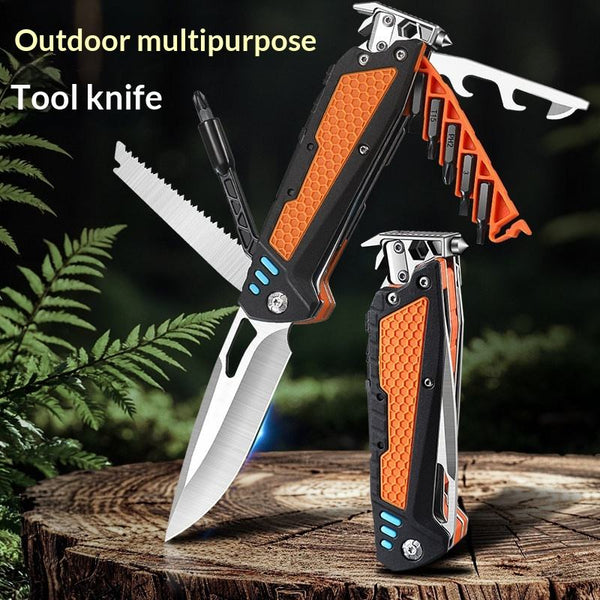
13-in-1 Folding Multitool Knife
Folding knife, saw, screwdriver bits, can and bottle opener, glass breaker, rope cutter, fire starter and whistle in one tool with a belt pouch.
See the multitoolHeadaches 7 and 8: after dark, staying found and staying safe

In short: Getting turned around on a night walk or losing sight of the group is a real risk. A whistle carries much farther than your voice and takes almost no energy to use.
Once the sun goes down, a familiar campground looks completely different. A short walk to the restroom or the creek can turn into ten minutes of wandering between trees that all look the same. On a hike, it is easy to fall behind the group and lose sight of them on a bend.
Shouting does not carry far and wears out your voice fast. A whistle is louder, carries farther and works even when you are tired or cold. Three short blasts is widely recognized as a call for help. Agree on simple signals with your group before the trip, such as one blast for "where are you?" and three for "come now."
Keeping the whistle on your multitool means it is on your belt, not in the tent. That is the whole point: safety gear only helps if it is on you when something goes wrong.
Headache 9: a bag full of single-use gadgets

In short: Packing a separate knife, saw, can opener, screwdriver set and fire starter adds weight and gives you more things to forget. One multitool covers the same jobs in one pocket.
The opposite problem is just as common. Some guys pack a separate gadget for every job, then spend the trip digging through bins looking for the right one. Here is how a single 13-in-1 folding multitool compares:
| Campsite job | Separate item you would pack | Multitool function |
|---|---|---|
| Cutting cord, tarp lines, packaging | Pocketknife or scissors | Folding knife, rope cutter |
| Kindling and small branches | Folding saw | Steel saw |
| Canned food and bottled drinks | Can opener, bottle opener | Can opener, bottle opener |
| Loose screws and bolts on gear | Screwdriver set, hex keys | Interchangeable bits, hex wrench |
| Starting a fire | Spare lighter or matches | Magnesium fire starter |
| Signaling your group | Whistle | Whistle |
A dedicated tool will always do one job a little better. But the tool you actually have with you beats the better one sitting at home. For most weekend trips, one well-made multitool in a belt pouch is the smarter carry.
How to make sure it goes on every trip

In short: Give the tool one permanent home in your camping gear, check it after each trip and keep simple safety habits.
The best tool in the world does not help if it stays home. A few habits fix that:
- One home. Keep the multitool in the same pocket of your camping bag or in your truck's center console. Do not take it out for house jobs unless you put it straight back.
- After-trip check. Clean and dry the blade, check that the screwdriver bits are all in the handle and make sure the fire starter and whistle are still attached.
- Belt pouch on arrival. When you get to camp, clip the pouch to your belt. Then the tool is on you, not on the picnic table.
- Kids and blades. Keep the tool closed and out of reach of young children, and teach older kids basic knife safety before they use it.
- Know the rules. Knife laws vary by state, city and park. Check the rules where you are going, especially for blade length and carrying in public places.
Camping should be about the fire, the food and the people around it, not about hunting for a can opener in the dark. Pack one good multitool, keep it in the same place every time and those nine small headaches mostly disappear. For more ideas on small fixes away from home, read our guide to camping and road trip repairs.